• True-Life Stories

    In the course of researching “The Secret Fire”, I  was privileged to meet several remarkable people, all  in their 90s, who had direct knowledge of secret British wartime operations.

    Among those I met were Pearl Cornioley, a formidable woman who parachuted into occupied France as a courier for the British Special Operations Executive (SOE) and ended up commanding more than a thousand French resistance fighters; Arthur Staggs, a tough Cockney who became radio operator for SOE’s “Farmer” network in northwestern France; and Jean Overton Fuller, the close friend and first biographer of SOE radio operator Noor Inayat Khan, on whose tragic Paris mission I partly based the story of Rose Arden in “The Secret Fire.”

    I interviewed them in order to ensure the detail and atmosphere of my story were as authentic as possible, and to root the more mystical aspects of “The Secret Fire” as firmly as I could in the grittiness of real life, especially in the many scenes set during World War Two.

    In addition, I sought out eye-witness accounts wherever possible of events described in the book, including the V-1 Aldwych attack, and visited key sites such as the V-1 launch complex at Morbecque in northwestern France.

    Pearl Cornioley and Arthur Staggs survived their missions, though only just; Noor Inayat Khan did not. Their pages on this site are intended as a tribute to their extraordinary courage, and give, I hope, a glimpse into their remarkable personalities.

  • Re-imagining the Past: Research and Reminiscence in Writing “The Secret Fire”

    (This article first appeared on Penguin UK’s website in March 2009.)

    I listened, spellbound. It had been nearly 64 years since wartime secret agent Pearl Cornioley’s parachute jump into Nazi-occupied France, but her recollection of that night in September 1943 held me mesmerized.

    “It was a static line, and consequently as I dropped I could feel the little bits of string cracking. Pop, pop … pop, pop, pop, until finally I felt the shock of the parachute opening itself …”

    As she spoke, Mme Cornioley, a legendary courier and Resistance organizer with Britain’s Special Operations Executive (SOE), conjured up a whole world of sharp, personal impressions from the dark days of World War Two.

    It would become the world of  “The Secret Fire”, my second novel.

    She described the fear of waiting to leap into thin air through a hatch in the fuselage of a Halifax bomber, just 300 feet above the ground, and what it smelled like in a particular SOE safe house. I learned of her determination as a young woman to fight the Nazi domination of her beloved France, and how it felt to stand for hours on unheated night trains, criss-crossing the French countryside with false identity papers …

    “The Secret Fire” is set in London and Paris, during World War Two and in the present day. It is both a stand-alone thriller, and a sequel to my first novel, “The Malice Box”.

    In 2007 and early 2008, I tracked down several veterans, all in their 90s, of Britain’s wartime intelligence operations in occupied France, seeking to root my story – a tale of love, betrayal and forgiveness, with a strong supernatural twist – as firmly and accurately as possible in the detailed, gritty reality of the period.

    I felt honoured to hear their stories, and scared for my interview subjects even decades after the events. I was appalled at the risks they had run, and at the personal price even some of the survivors had paid.

    I was grateful for the opportunity to share their memories, and to fold them, fictionalized and transformed, into my own work, alongside eye-witness accounts of wartime London that I’d found in museums and archives — some of them unread for years — and stories of World War Two told by my own parents.

    I thought it would be a suitable tribute to try to recapture some of the past they had described to me, in a story that reflected their courage and sacrifice – one in which time itself is treacherous, and even the settled history of nations might be rewritten.

    Pearl Cornioley, née Witherington, spoke to me in 2007, just a few months before her death, at the retirement home in central France where she spent the last years of her life.

    The distinguished historian M.R.D. Foot, author of the official history of SOE, kindly met me for lunch at a Mayfair restaurant, and reminisced about flying into occupied France as an SAS intelligence officer – a mission he barely survived after hostile French farmers, wielding pitchforks, broke his neck.

    A tough Cockney, Arthur Staggs, saw me at his comfortable flat in the Oxfordshire town of Thame to talk about his time as an SOE radio operator in the Lille region – and the terrifying experience of being captured by the Gestapo.

    “Rat-a-tat at the door. My friend’s wife opens the door, and who bursts in? Gestapo,” he said. “The Germans walk in, and they’ve got these submachine guns, and one is stuck in my belly. That’s the biggest fright I had. That’s when the shivers came, that’s when the sweat came. I thought: he’s only got to press that trigger, and I’m oblivious.”

    Mr Staggs survived weeks of Gestapo interrogation, and was eventually released, his cover story intact. One of his captors even gave him a half-apology, saying they’d thought he was an English agent.

    As a result of his wartime experiences, though – the loss of brave friends, the constant strain of clandestinity, his time in captivity — Mr Staggs suffered from what doctors termed “nervous exhaustion” for seven years after returning home.

    Readers of “The Malice Box” may recall a few glimpses of World War Two in the history of its main characters. The hard-nosed octogenarian Horace Hencott had fought the Nazis as a member of the American OSS, the forerunner of the CIA. The grandmother of penitent spy Katherine Reckliss may also have moved in espionage circles. There was mention that an alchemical document written by Sir Isaac Newton had been acquired by Nazi agents at a 1936 Sotheby’s auction …

    “The Secret Fire” tells the story behind those references – a tale mixing documented fact with fiction. Pre-war Parisian occultists pursue the secrets of the alchemical Great Work that is said to turn lead into gold, even as scientists in the same city – the Curie family to the fore – explore the transmutation of the elements by purely physical means, in their experiments with radioactive decay.

    As war grips Europe, both kinds of secrets – the atomic and the alchemical – are sought by the Nazis, and the Allies mount a joint SOE-OSS mission to ensure neither falls into enemy hands.

    Heading the mission is a young Horace Hencott. He’s aided, unbeknownst to him, by an array of selfless forces in rural England, for whom the Nazis are only the latest in a long line of threats against their island kingdom, dating back to the Spanish Armada.

    Opposing him is the chilling, sadistic Isambard – an acolyte of SS chief Heinrich Himmler, and a leading operative in Himmler’s Ahnenerbe, sometimes known as the Nazi Occult Bureau.

    The two men battle, in wartime Paris and through the subsequent decades, for the allegiance of double agent Peter Hale, in a contest that may shape the fate of the world – because time, like memory, can fade and flare in “The Secret Fire”, eddying and flowing in unexpected ways. Guilt and betrayal defy time. Forgiveness can melt its grip.

    How different might the world be, Horace asks in the novel, if the Nazis were to manage to set off a weapon of mass destruction in London, just a few weeks after D-Day? Or if one of them could still do so today …?

    In exploring such alternative histories, I was inspired by the speculation of eminent historians, for example in a 2004 BBC radio programme marking the 60th anniversary of D-Day, about what might have happened if the Normandy landings had failed. In “The Secret Fire”, I took their musings a step further. What if Himmler’s Ahnenerbe had acquired something akin to an atom bomb …?

    In addition to my interviews with wartime secret agents – none of whom were privy to, or responsible for, any of the supernatural elements of my story – I also drew on many other sources.

    At the National Archives at Kew, and in the reading room of the Imperial War Museum, perched up in the museum’s magnificent dome as though in a pigeon loft, I inspected eyewitness accounts, official reports and photographs of V-1 flying bomb attacks on London – the dreaded “robot bombs”, to use a contemporary phrase, which terrorized Londoners in the months following D-Day. I gathered as much information as I could about the June 30, 1944 V-1 explosion at Aldwych that features so centrally in “The Secret Fire”.

    In rural Northamptonshire I met writer Jean Overton Fuller, who reminisced with me about her close friend Noor Inayat Khan, known in the French Resistance as Madeleine. An SOE radio operator based in Paris in 1943, Ms Inayat Khan was one of the inspirations for my character Rose Arden — a heroine of “The Secret Fire”, and the grandmother of Katherine Reckliss. The real-life Madeleine was betrayed, and sent to die at Dachau.

    I read Madeleine’s SOE personal file at Kew, handling heartbreaking scraps of her life – her practice signatures for her false identity, official reports on her training as a clandestine agent, and a pencil-written note sent to London from the field asking for more radio crystals.

    It was a privilege for me to gain these glimpses into the lives of people who lived through such extraordinary circumstances. I hope – at least in fiction – to have recaptured a few fragments of their remarkable pasts. 

  • “Oranges and Lemons” – a London secret, hidden in plain sight

    Folk knowledge and old secrets, often garbled and no longer understood, can sometimes still be found in such apparently innocent repositories as fairy tales and children’s songs.

    London Ley Line

    In “The Secret Fire”, the song ‘Oranges and Lemons’, its true meaning long forgotten, is said by the novel’s main villain, Isambard, to encode a great London secret — the location of the mighty artery of power that is the city’s main ley line.

    (Click here to view the London or “St Paul’s” ley line in Google Maps)

    Beyond the short version of the song used in the popular children’s party game, there is also a longer, older version, listing more churches, that contains the secret.

    It has been hidden in plain sight through the ages, but can be decoded — as long as the right churches are understood, for they are not always the traditional ones.

    Following is the full version of the song, with the significance of each line explained by Isambard:

    Gay go up and gay go down, to ring the bells of London Town.

    “This is simply the preamble, and might be held to have no secret meaning, except that ringing the bell of a sacred location is an expression we use to signify tapping into its power.”

    St Clement Danes

    Oranges and lemons, say the bells of St Clement’s.

    “This is commonly held to refer to St Clement’s church in Eastcheap, near wharves where fruit was loaded from the ships in past times. But in our reading, its reference is to the church of St Clement Danes, a central point on London’s artery of power, located among a cluster of holy wells.”

    Bullseyes and targets, say the bells of St Margaret’s.

    “This refers to the church of St Margaret Lothbury, just north of the site of the Bank of England on Cornhill, and just to the north of our line.”

    Brickbats and tiles, say the bells of St Giles. 

    The inclusion of the phrase St Giles, in the fourth line, is a reference to St Giles’s Greek, a term for thieves’ cant or slang. It tells us that a special language is being used in this song, one where the ostensible term does not necessarily represent the real meaning. It’s like reading the words and illustrations of an alchemical book. Having noticed the presence of the phrase, we can discard it. It does not refer to any of the St Giles churches in London, it is merely a marker. For the uninstructed, of course, it serves simply to confuse the pattern.

    Ha’pence and farthin’s, say the bells of St Martin’s.

    “In our reading, this is St Martin-within-Ludgate on Ludgate Hill, again just above our line, setting its northern limit. The font here is engraved with a fascinating palindrome in Greek: Niyon anomhma mh monan oyin. Cleanse my sin and not just my face.”

    Pancakes and fritters, say the bells of St Peter’s.

    “This is St Peter upon Cornhill, which claims to be the earliest Christianized site in Britain, just below our line, framing it to the south.” An alternative site would be St Peter in West Cheap, just to the north of the line.

    Two sticks and an apple, say the bells of Whitechapel.

    “This refers not to a particular church, but to the famed bell foundry of Whitechapel in general, and so to the principle of bells, of harmonic resonance, and so to our unnamed art. It does not appear on our map.”

    Maids in white aprons, say the bells of St Katherine’s.

    “St Katherine Cree in Bishopsgate, just south of our line.”

    St John's, Friday Street (+98, also known as St Werburgh. This section of Friday Street has since been built over, and a pub stands on the site of St John's)

    Pokers and tongs, say the bells of St John’s.

    “St John the Evangelist, formerly on Friday Street, destroyed in the Great Fire of 1666. Just south of our line.”

    St Anne's in Soho

    Kettles and pans, say the bells of St Anne’s.

    “This marks the continuation of our line to the west, and refers to St Anne’s in Soho. It sits squarely on our line.”

    Old father baldpate, say the slow bells of Aldgate.

    “St Botolph-without-Aldgate, just south of our line in the east.”

    You owe me ten shillin’s, say the bells of St Helen’s.

    “St Helen’s Bishopsgate, directly on our line in the east.”

    St Helen's Bishopsgate

    When will you pay me, say the bells of Old Bailey.

    “The reference here is to the death knell rung at the church of St Sepulchre, and later at the Old Bailey itself on its own bell, on days of public execution. Apparently an outlying marker, north of our line. For this reason, we consider it in the symbolic sense. The wages of sin is death, is perhaps the best summary, where sin is understood to be the misuse of the power of the line.”

    St Bride's

    When I grow rich, say the bells of Fleetditch.

    “This was later altered to Shoreditch, but in the earlier versions the song said Fleetditch, referring to St Bride’s church, on the banks of the River Fleet before it was culverted. St Bride’s is directly on our line.”

    Pray when will that be, say the bells of Stepney.

    “St Dunstan’s, in Stepney, directly on the continuation of our line to the east, and mirroring St Dunstan-in-the-west on Fleet Street, situated just north of our line.”

    I do not know, says the great bell of Bow.

    “St Mary-le-Bow on Cheapside, the church all true Cockneys are said to identify themselves by. Directly on our path.”

    St Mary le Bow

    Although not mentioned in the nursery rhyme, several other churches, or the sites of former churches,  lie along the line, including of course St Paul’s Cathedral and the round Temple church.

    The great artery also runs directly along a stretch of Pilgrim Street near St Paul’s, and is marked by an intriguingly-located obelisk at Salisbury Square just west of St Bride’s (moved there in the late 20th century from nearby Ludgate Circus). On its western arm, it passes just below the twin obelisks outside St George’s church and traverses Sotheby’s auction house before bisecting Grosvenor Square and running on to the point formerly called Bayard’s Watering Place, now known as the Italian Gardens, where the buried Westbourne river enters Hyde Park.

    In Sir Christopher Wren’s plan to rebuild London after the Great Fire of 1666, the eastern part of this line, from St Helen’s to Temple, was virtually a single, straight boulevard, a grand avenue along the great London line of power.

    It may all just be a coincidence, of course. But in Isambard’s hands, it makes for a great yarn ….

  • The Origins of The Malice Box

    This article first appeared on Penguin’s UK website in February 2007.

    In keeping with the riddling spirit of The Malice Box, it seems appropriate to begin with a puzzle. What do Shirley Bassey, a bowler hat, the state of Kentucky, the RHIC particle accelerator at Brookhaven National Laboratory, and the medieval English coins known as Rose Nobles have in common?

    Getting started

    The core idea of The Malice Box, a psychic weapon of immense destructive power that can only be disarmed by those ready to face physical and spiritual danger, came to me a few months after the attacks of 2001.

    While going through notebooks and an unpublished novel in Montreal, I found myself returning to a charming but maddening foreign correspondent named Adam Hale. The new story began to take shape around him. Adam needed to be paired with his opposite, someone solid and dependable who would act as Earth to Adam’s Air. That was the genesis of Robert Reckliss: brave, dependable and not reckless, but with a buried need to be more like Adam.

    The mysterious weapon merged with other images and themes: the hidden secrets of New York, the story-telling potential of GPS and the Internet, the past splendours of Islamic civilization, and questions of anger, love and hatred.

    On sources

    I wanted to write a thriller for a wide audience, but one that would draw on unconventional sources. Into the story went an irrational fear of Ouija boards; Keynes’s description of Isaac Newton as “the last of the magicians”; the strangeness of quantum and Einsteinian physics; comic strips and early Doctor Who; and traditions of Gnosticism, Sufism and sacred geometry.

    Love and fear

    The book also grew out of fear and anger, and the terror that can afflict us when everything familiar is torn away by violence or danger. Do we fall apart, hit back, forgive, or do all of these things at once?

    As a reporter, I was shaken by several experiences, including witnessing the aftermath of underground explosions in Guadalajara and surviving the destruction of my jeep in El Salvador. Each time, writing and love helped me overcome the bleakness and draw something of value from it.

    Drewary and qi

    Robert faces similar challenges on a far greater scale. As he and his wife Katherine try to save New York from an attack that could wipe out half the planet, he is drawn into a world that defies everything he has believed.

    The tools for navigating that world are expressed through alchemy and the sequence of the chakras: earth, water, fire, air, ether, mind and spirit. These elements also correspond to the characters. Adam is Air and Robert is Earth. Katherine is fiery; Terri carries Water, reflecting traditions as disparate as the Drewary of East Anglia and the qi techniques of Taoism.

    Beyond them all is Tariq, an ostensible villain who makes superhuman efforts to behave honourably under impossible strain. I think of The Malice Box, in the end, as a love story involving each of these characters.

    It is also a walking tour of New York, with clues dropping into place one by one. And finally, in various ways, it is a novel about transmutation: taking the dross of fear, pain, loss and destruction, and turning it into gold.

    Martin Langfield, New York, 2007

  • What is The Secret Fire?

    The Secret Fire is my second novel, and like the first is an unusual thriller tinged with supernatural themes. A story of love, betrayal and forgiveness set in London and Paris during the present day and World War Two, it is a prequel and sequel to my debut novel The Malice Box, which was first published by Penguin UK/Michael Joseph in the UK in 2007.

    The Secret Fire came out on April 16, 2009. This website provides links, for those who are interested, to further reading and sources on the book’s main themes. I hope you find it informative and useful.

  • What is The Malice Box?

    The Malice Box is my first novel. An international best seller, it is a mystical thriller inspired by alchemy, riddles and the work of Carl Jung.

    London’s Shots magazine called it “one of the strangest and one of the best novels I have read for a very long time”.

    Not all of it is suitable for children.

    The Malice Box was first published by Michael Joseph/Penguin in the UK, and has been translated into 13 languages.

  • Welcome!

    I am a writer and journalist by trade and a drummer whenever allowed. I was born in eastern England in 1962 and live in New York.

    My journalism has been perpetrated over more than 30 years as a foreign correspondent and editor with Reuters and more recently as a columnist for Reuters Breakingviews and News-Decoder.

    My nightmares involve the news industry, technology and society destroying each others’ best selves. I work for the opposite outcome as a freelance editor, writer and consultant, while also exploring new imaginative paths in words and sound.

    I’ve published two genre-bending novels, “The Malice Box” and “The Secret Fire,” which have been translated into a total of 13 languages so far. I get better each time I do one and am hopeful the next one(s) will make new friends.

    I also helped create the groundbreaking educational startup Yuno in 2021. Check it out. You might learn something new!

    I studied Spanish and French at university and speak them fluently, get by in German and can decipher Portuguese and Italian. I have also worked as an English teacher in Paris and studied Indigenous languages and literature in Mexico.

    I joined Reuters in 1987 in London. I worked primarily in Madrid, El Salvador, Mexico, Miami and New York, with extensive assignments to Peru, Cuba, Chile and Nicaragua, among other locations. Some of my work can be found here. I’ve taught journalism ethics and advocated for greater awareness of PTSD among news workers.

    I’ve survived an 8.1 magnitude earthquake, a kidnapping attempt, a car bombing (my car) and many years of following the New York Knicks and Tottenham Hotspur.

    Temperamentally I’m a storyteller, an invisible mender, an alchemist and a diplomat, with a small dab of holy fool thrown in. But I do like to get my facts straight.

    I believe the world needs more cowbell, but like everything else you may read here, that’s just my opinion.

    No, strike that. We all need more cowbell.

  • A Cautionary Tale

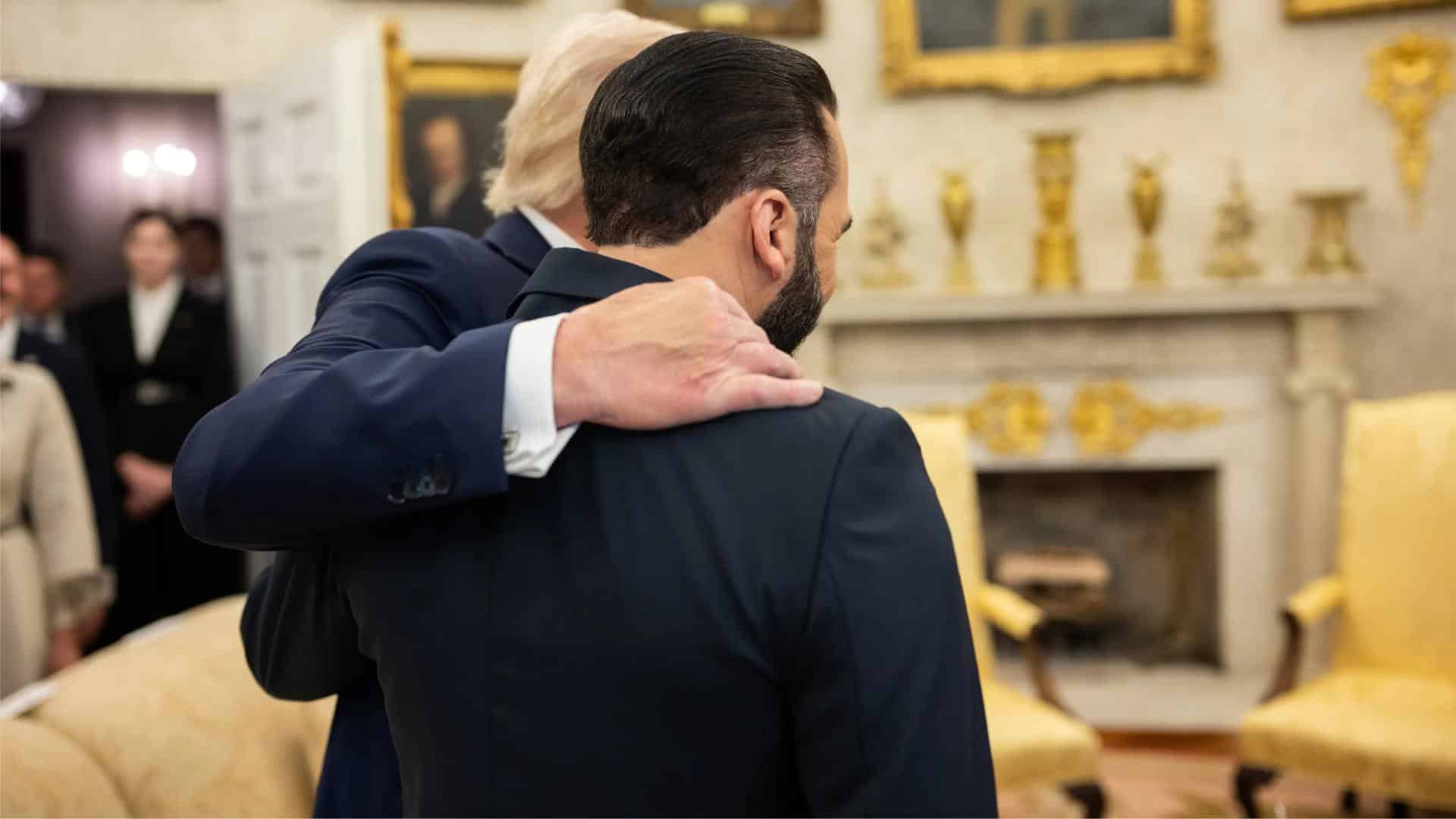
    I wrote an article for my friends at News Decoder about the age-old balance between security and freedom, and how the increasingly dictatorial Nayib Bukele in El Salvador should be a cautionary tale, not an inspiration, for his admirers in the United States.

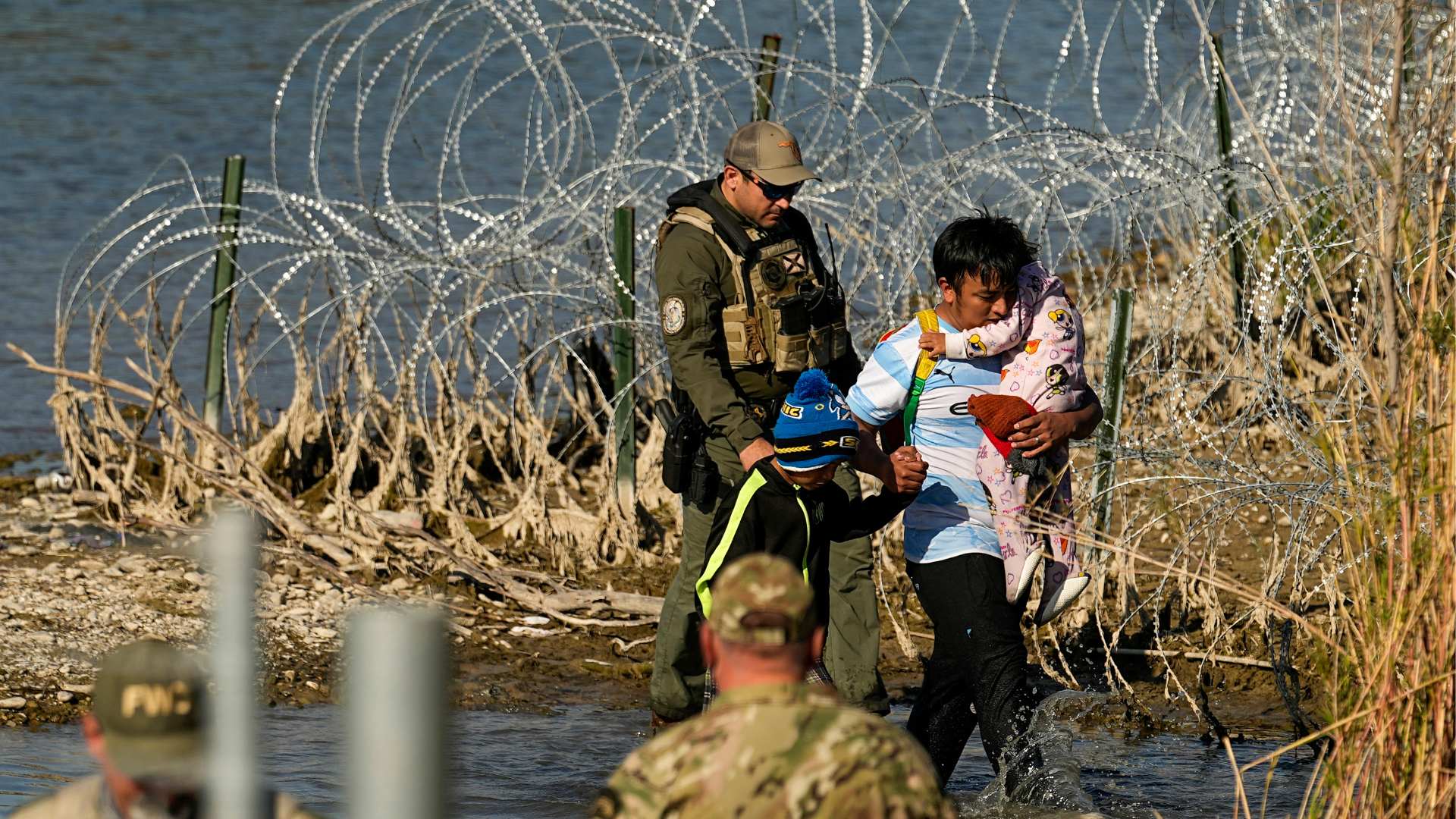
  • Can the U.S. Make Peace With Migration?

    Borderlands, in many cultures, can be places of transformation — and danger. You might find a new life. You might simply vanish. You might die. That’s rarely been truer than for people trying to reach and cross the U.S. border from the south right now.

    Here’s an article I wrote about migration and America for News Decoder.

  • The Wheel of Violence

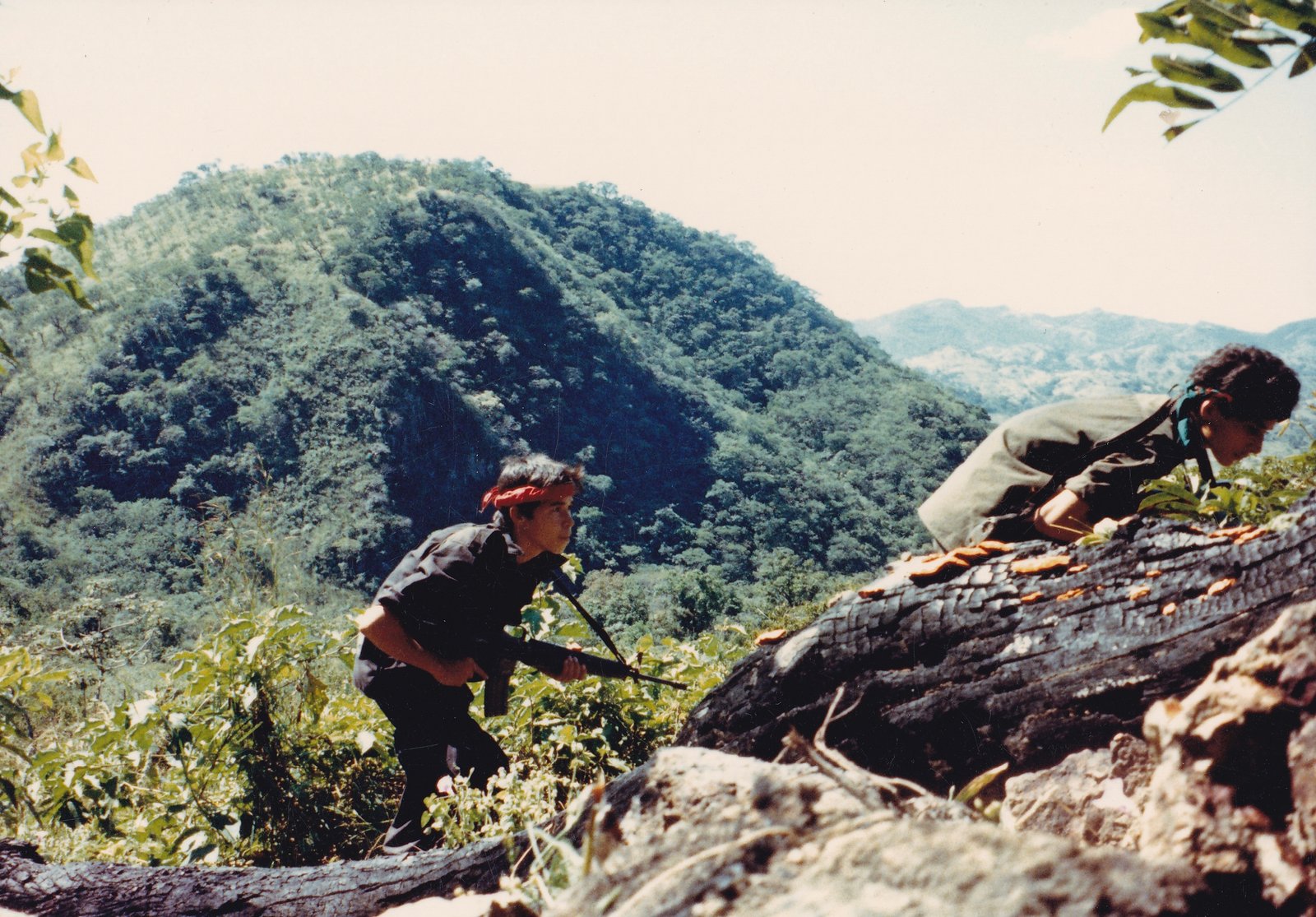
    Here’s an article I wrote recently about cycles of generational violence and trauma for my good friends at News Decoder. It’s about El Salvador, where I worked in the early 1990s, but it could be about many other places too. Repression and violence breed future trauma, and where trauma is unresolved there is no lasting peace.

    FMLN guerrillas in El Salvador, 1991. Photograph by Martin Langfield