Author: mlangfi@gmail.com

  • If we can’t be saints, let’s be healers

    In this time of virus lockdown, social distancing and polarization, these lines from the final pages of “The Plague” by Albert Camus (1947) seem useful:

    “(He) decided then to write the account which ends here, in order not to be among those who stay silent, in order to leave at least a memory of the injustice and violence done to them, and to state simply what we learn in the midst of plagues, that in humankind there are more things to admire than things to despise. But he knew nevertheless that this chronicle could not be that of a final victory. It could only bear witness to what had to be done and would have, no doubt, to be done still, against fear and its tireless weaponry, despite their personal losses, by all the people who, unable to be saints and refusing to accept pestilence, try nevertheless to be healers.”
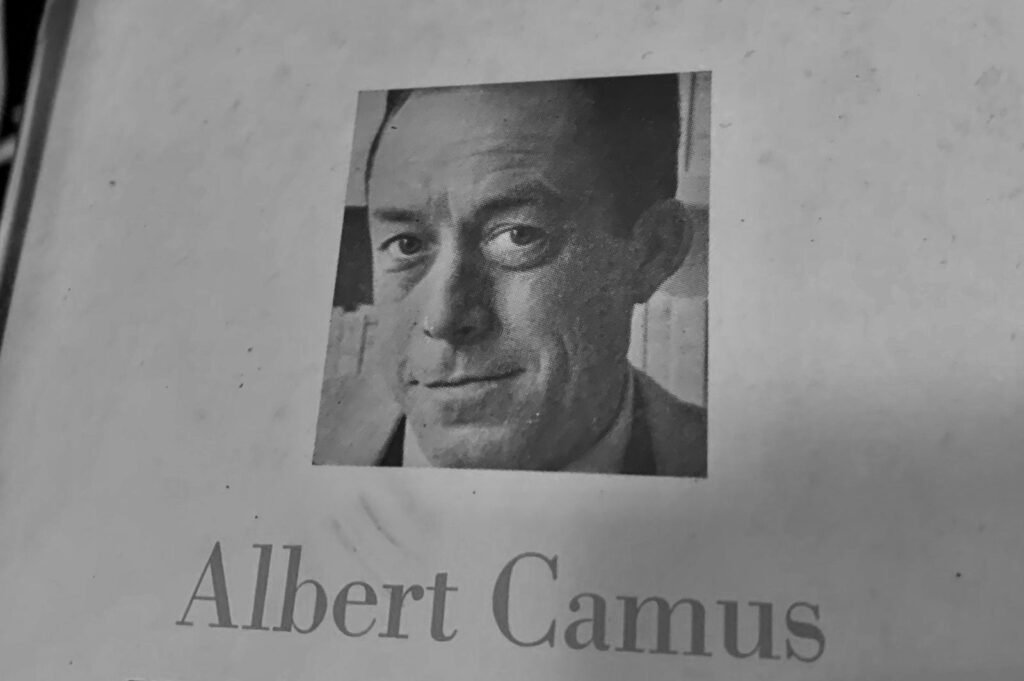
    Pléiade edition of Camus’ works, which I bought in Nantes in 1978. Photo by Martin Langfield

    (Translation is mine. Camus uses “médecins” at the end, which means “doctors,” but since we can’t all be doctors like his narrator, I chose a broader term.)
  • The future is now

    I just finished “Agency,” William Gibson’s latest, 10 days or so ago and the ending still resonates in my imagination. Well worth the meticulous and fascinating buildup. It’s a worthy sequel to “The Peripheral,” and, like that novel, very much about the present day, however richly the future/alternative worlds are imagined. I reviewed “The Peripheral” back in the day. I’m pleased to see much of it holds up for “Agency” too.

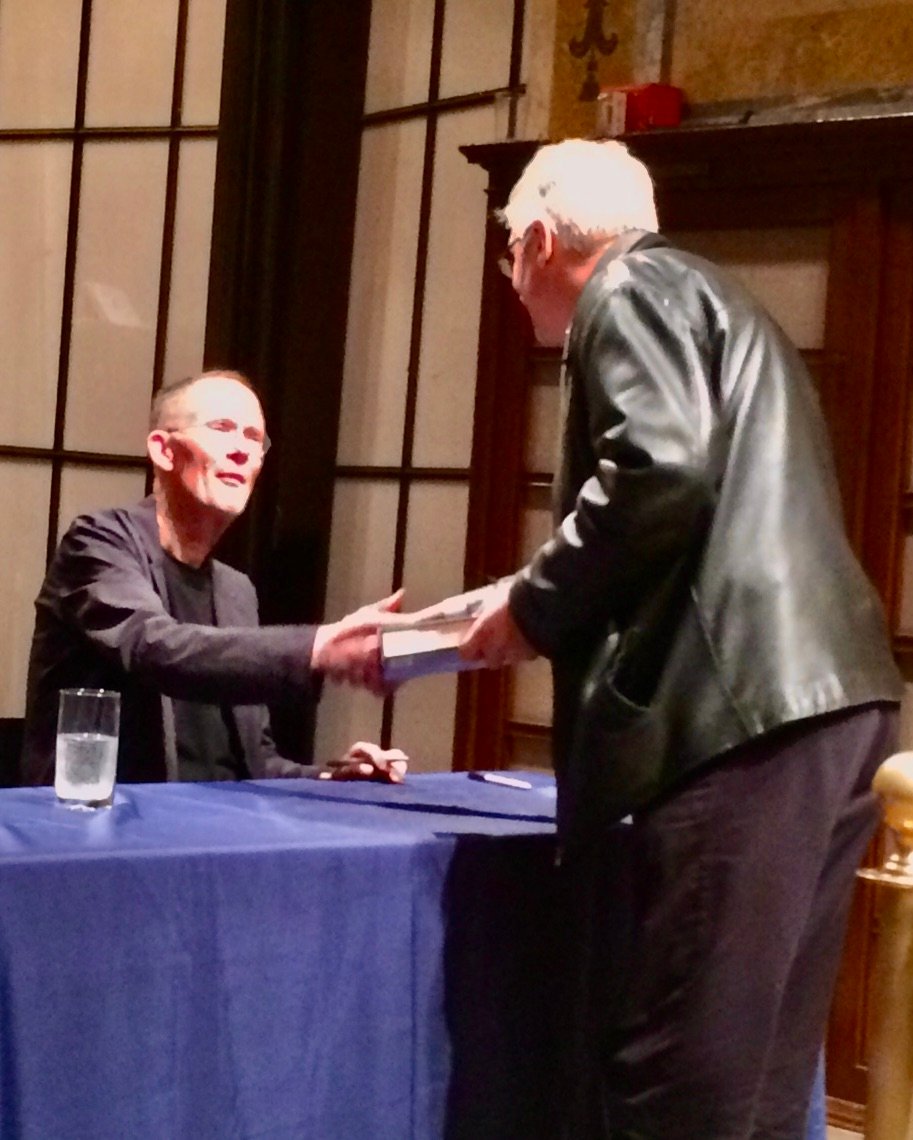
    William Gibson and Martin Langfield at the New York Public Library, November 12,  2014. Photo by Amy Langfield
  • A New Soundscape!

    A New Soundscape!

    I made a new soundscape, this one more ethereal, cleaner, less ragged. 

    I’ve been experimenting with improvised, time-altered patterns on drums and other percussion to build evocative soundscapes, taking advantage of accidental discoveries along the way. The music resulting from this process aims to grab the listener’s attention with unusual sounds, suggest cinematic images in their imagination and slow the listener’s mind to a more contemplative state. In editing I choose passages that suggest transformation – from conflict to calm, for example, or violent to angelic voices. Each listener will project their own stories onto the music.

    I haven’t stopped writing. But this is a very enjoyable way of clearing my mind and exercising other imaginative muscles, so to speak. Working across different media is an exciting extension of writing across different genres, as I have done before. Let’s see where it goes. Enjoy!

  • “Peace will generate even more pathology”

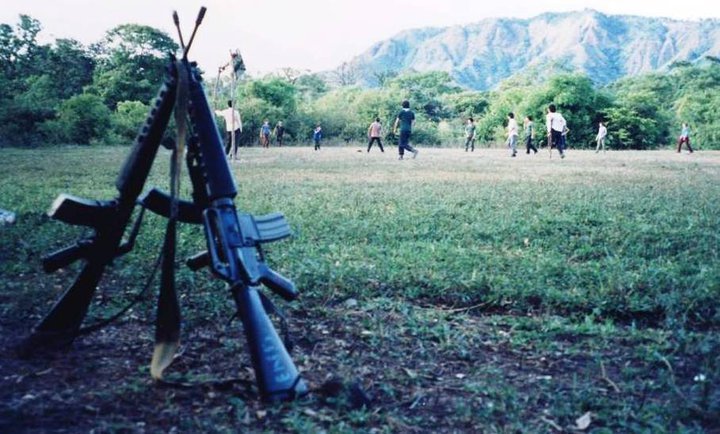
    I fear my 1990 Reuters piece (as printed here in the L.A. Times) was prescient, sadly, about the mental fallout of El Salvador’s civil war. May other warring and post-warring nations do better.

    Photo by Martin Langfield, El Salvador, 1991.
  • Today is day one

    Today is day one

    I joined Reuters, the international news service, when I was 25. I did some thrilling, fascinating, challenging, occasionally terrifying things over the subsequent three and a bit decades. I got to be a foreign correspondent, an editor, a mentor and a member of journalistic teams large and small in a dozen countries, mostly in the Americas. I was also at times their leader. It was a privilege to work with some fabulous people throughout that time. Now I’m off on new adventures, the exact nature of which will become clearer in the months to come. I don’t yet know myself, but that’s part of it. Still based in New York, blessed in family and friends. May the next 30 years be as exciting as the last 30. Today is day one.

  • Review: The attack of the killer fridges has begun

    The world is ever more connected via the internet, from cars and power grids to home appliances and toys. That means ever more things are dangerously hackable, security expert Bruce Schneier writes in “Click Here to Kill Everybody.” The title is hyperbolic, but not by much. In some ways, the attack of the killer fridges has already begun. Here’s my review.

  • Review: The other side of Trumpismo

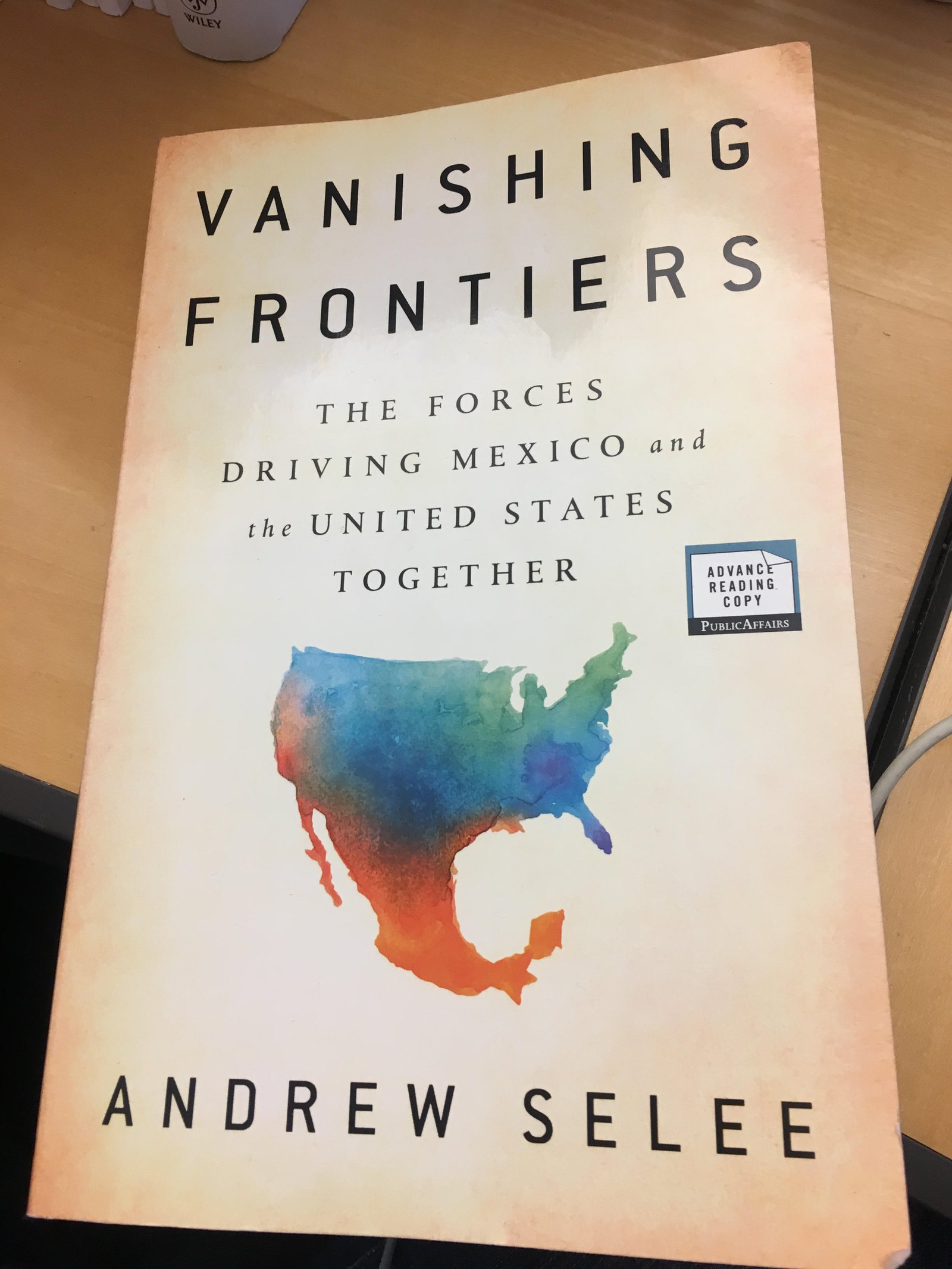
    Mexico and the U.S. share complex, ever-deeper ties that contradict Donald Trump’s hostile rhetoric, Andrew Selee writes in “Vanishing Frontiers.” Bicultural businesses, movies and even co-hosting soccer’s 2026 World Cup are better signposts to the future than nationalist rants. Read my review.

  • Review: The next fight for Latin America’s soul

    My review of Michael Reid’s excellent “Forgotten Continent: A History of the New Latin America.”

    Dictators and demagogues have come and gone; progress in the region has been impressive. Still, rule of law and effective institutions still lack, Michael Reid writes in “Forgotten Continent.” That makes the next steps toward prosperity harder.

  • Talk to me

    statueofliberty

    Reposting this 2012 piece I wrote on how people of left and right can talk to each other, and the value of dissent.

  • Castro embodied the weakness of strongmen 

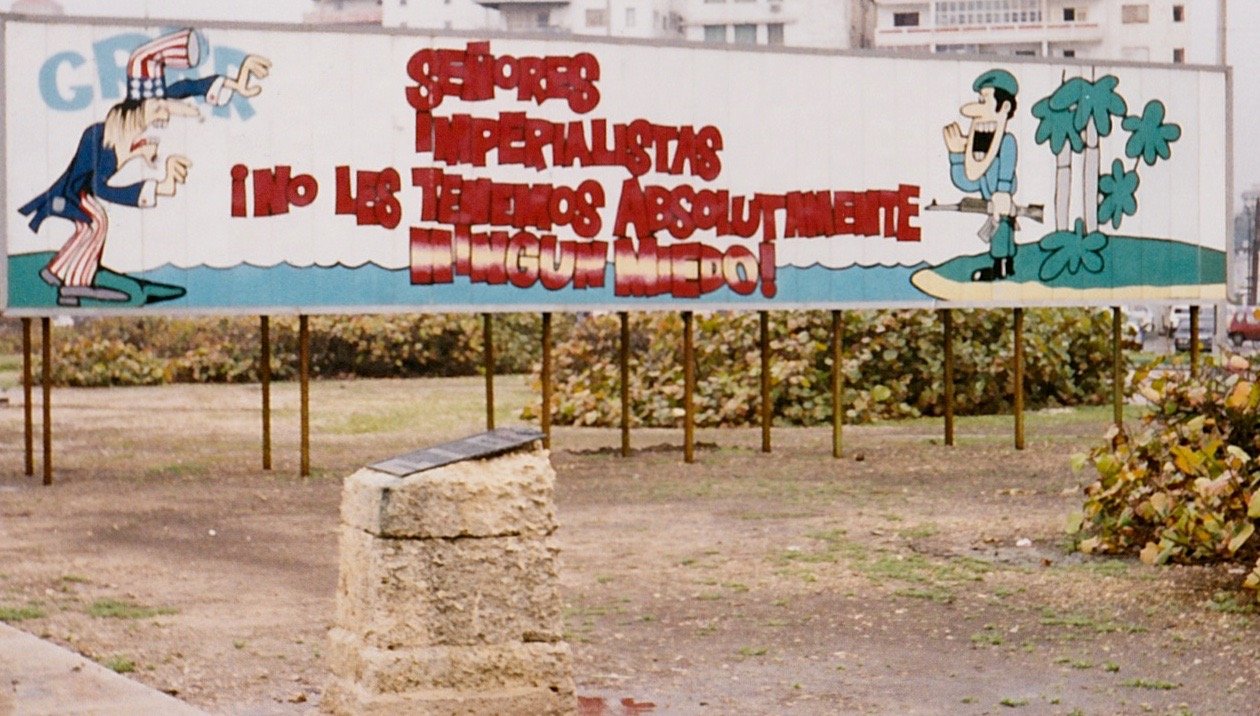
    havana1998
    (Havana, outside the U.S. Interests Section of the Swiss Embassy, 1998. Photo by Martin Langfield.)

    My column on the passing of Fidel Castro.

    The charismatic Cuban leader resembled other paternalistic caudillos of right and left in his outsized ego, which ultimately stymied his people. Cubans, like other Latin Americans, need institutions more than saviors like Fidel. Venezuela’s leaders are another example.